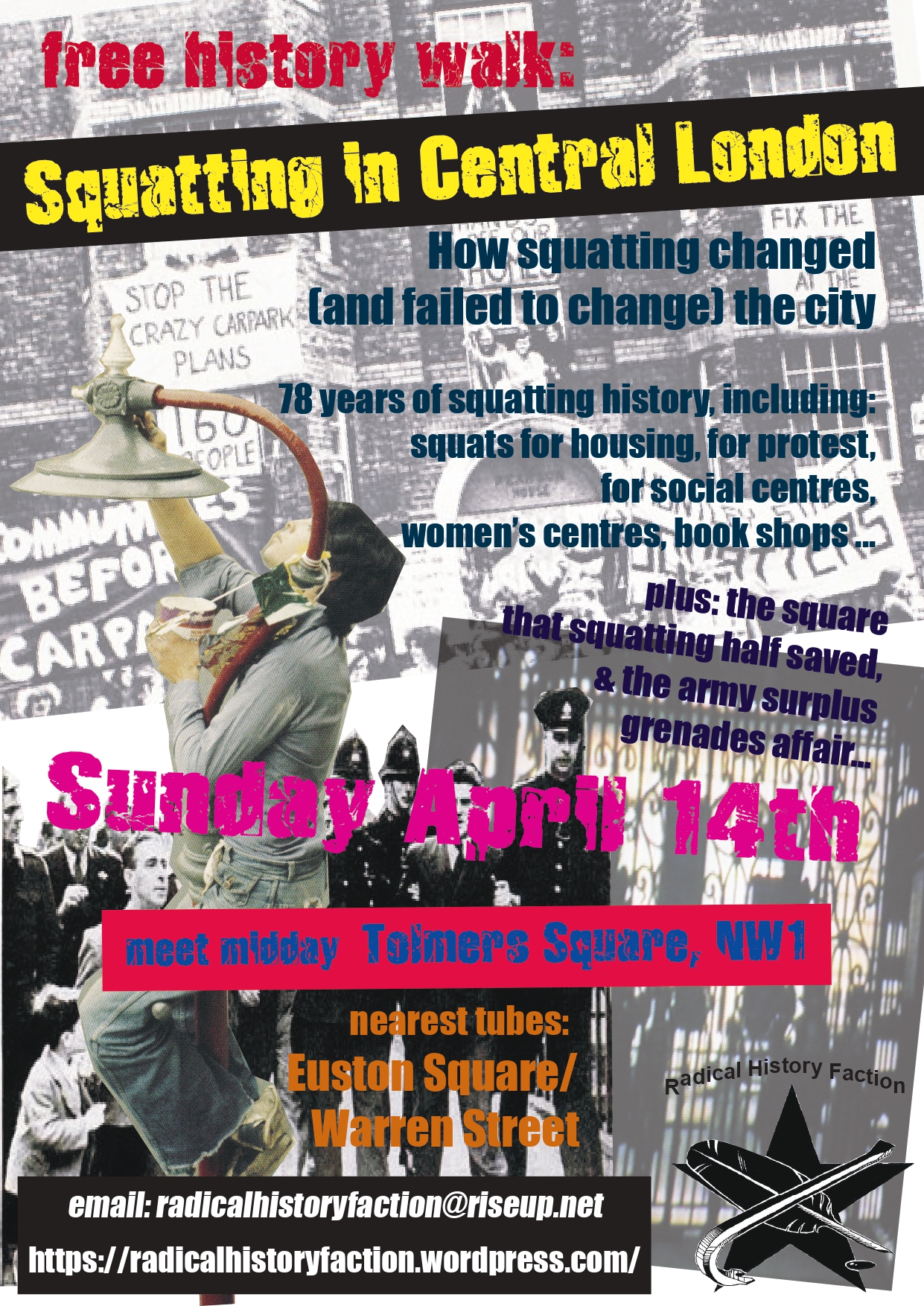
Radical History Faction stretches its wings this year and flies beyond Hackney and Islington.
Several walks are planned* – the first is Sunday April 14th, 2pm Tolmers Square NW1.
*Including a Hackney one, don’t worry!

Radical History Faction stretches its wings this year and flies beyond Hackney and Islington.
Several walks are planned* – the first is Sunday April 14th, 2pm Tolmers Square NW1.
*Including a Hackney one, don’t worry!
The 2024 Radical History Faction programme will be unleashed in the near future. Until then, here are some other Hackney happenings you may be interested in:
Hackney Art Activism Festival 27 April – 6 May
“A 10 day sound + visual art festival exploring community resistance to policing in Hackney from 1980s to today.
Venues + Locations: Gillett Square, The Vortex, C.L.R. James Library, Hackney Archives, The RIO + Online.”

https://reelrebelsradio.com/if-mi-nuh-laugh-mi-cry-hackney-art-activism-festival
One of the reasons this site started was the lack of information available about community responses to corrupt, racist and violent policing in Hackney in the eighties and nineties, specifically the amazing work done by Hackney Community Defence Association.
It looks like a number of people who were active in HCDA are involved with this event. There are lots of great things in the programme, but everyone should go to the free exhibitions at Hackney Archives and Gillett Square.
Some good times to visit might be the We Remember HCDA celebration and vigil at 2pm-8pm on Saturday 27th April and the Archiving and Legacy event with speakers from HCDA at 1pm to 4pm on Sunday 28th April.
Gillett Square has specifically been chosen because of its proximity to Bradbury Street, which was home to the HCDA HQ, the Colin Roach Centre – as well as number of other co-operatives. The square is not immune to local pressures and struggles and an anti-gentrification protest was held there in 2006. Since then it has been a contested space, being a cornerstone of “radical black history” and also, more ominously, the focus of an award winning redevelopment by architects. Clearly the festival is squarely in the tradition of the former…
Hackney History Festival 10th-12th May

Including: Susan Doe on Hackney’s Suffragettes, Breda Corish on how the campaign for Home Rule in Ireland played out in Hackney, Stephen May on the weeks Stalin, Lenin, Trotsky, Rosa Luxemburg spent in Hackney in 1907 and a Black History Walks tour of Dalston.
Talks are mainly £3 or free.
The venues also have their own radical histories:
Hackney Museum
Finally, I should really get along to the museum and check these exhibitions out:


Towards the end of the 19th Century, Elijah Sherry founded a timber business, initially dealing in dockyard off-cuts before opening a timber yard in Bethnal Green. The family business rapidly expanded and in 1912 “bought a site along the Hackney Cut at Homerton Bridge, kitted out with a new steam and electric plants – including band mill, sawmill, planing and mould mill.” This site closed in 1970 after a series of mergers.
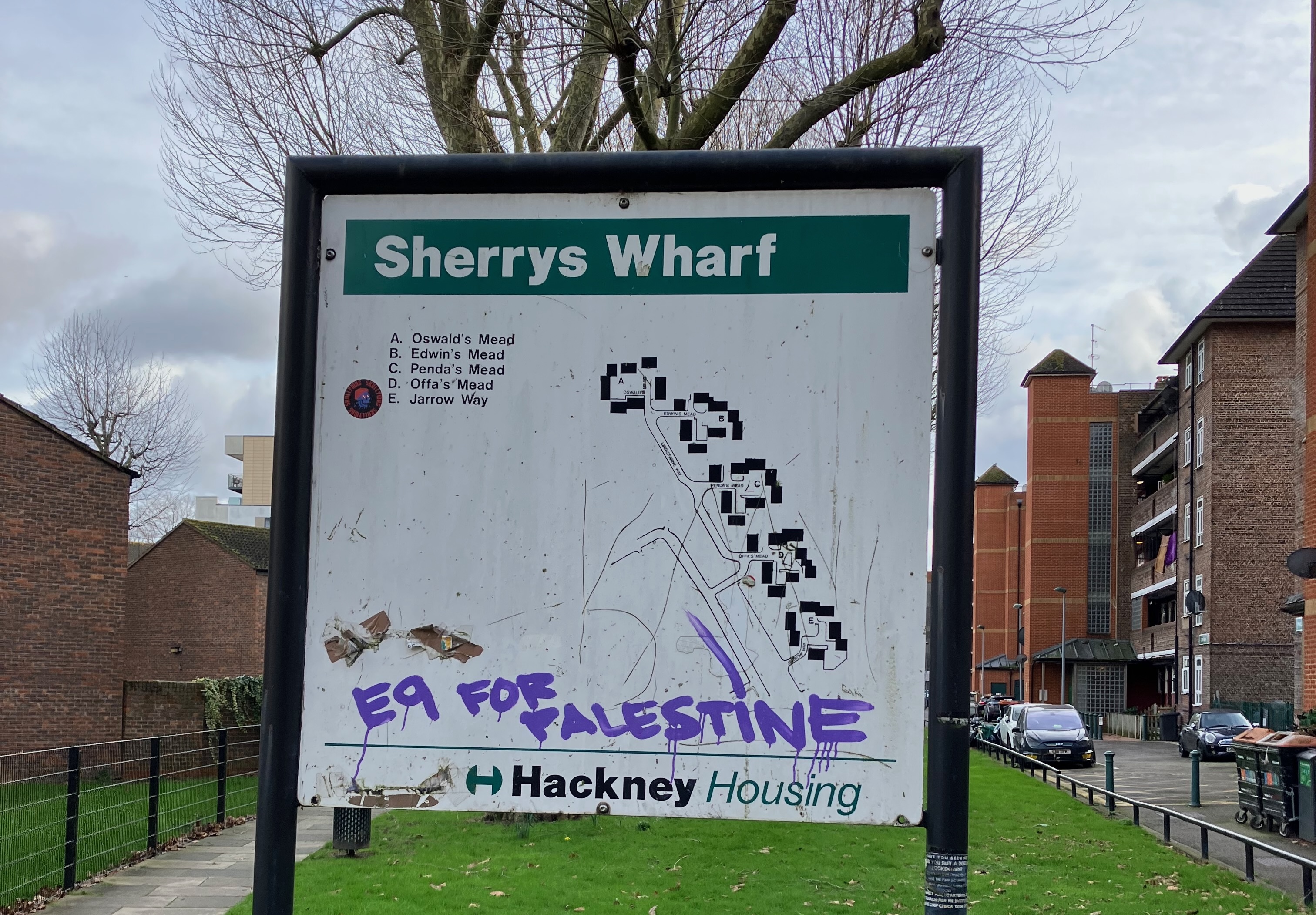
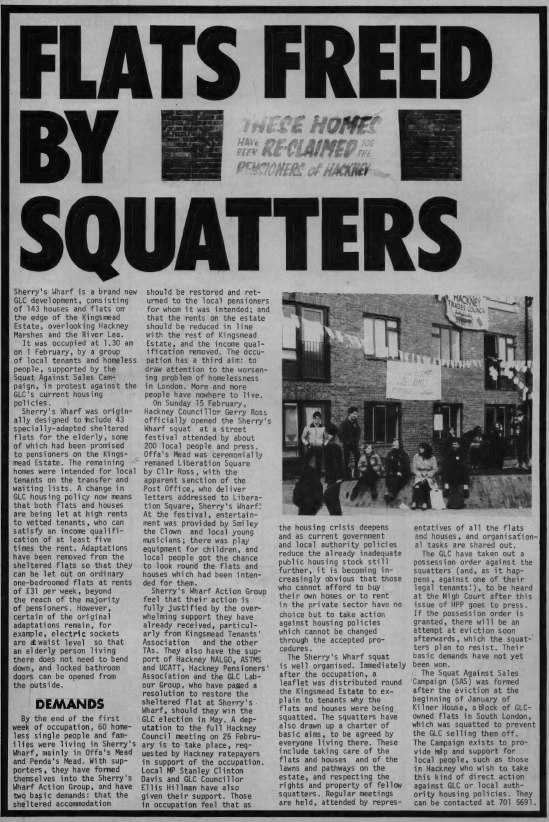
In 1972 the land was acquired by the Greater London Council (GLC), who redeveloped it into an estate of 143 maisonettes with gardens. Of these, 43 were specially adapted sheltered flats for the elderly. This new estate was finished in early 1981 and overlooked Hackney Marshes and the River Lea. (I am unclear if that was desireable in 1981 or not – leave a comment if you know more!)


Residents in the adjoining and delapidated Kingsmead Estate were originally promised first refusal for the new flats by the Labour-controlled GLC. Including several pensioners who were looking forward to the new sheltered accommodation.
But there was a change of heart in May 1977 when the GLC became controlled by the Conservatives. With typical greed, the tories decided instead to put the new flats up for sale with a minimum asking price of £30,000 (£233,595 in 2024 money).
This did not go down well with local people, who protested the GLC into a minor climbdown: Some of the flats would be rented out at between £22 and £37 a week – a figure astronomically higher than the council rents of the time. New tenants were vetted by the GLC and expected to be on a wage of at least five times their rent. There is a fairly transparent agenda here to reserve the new estate for wealthier, more “respectable” people.

Protest!
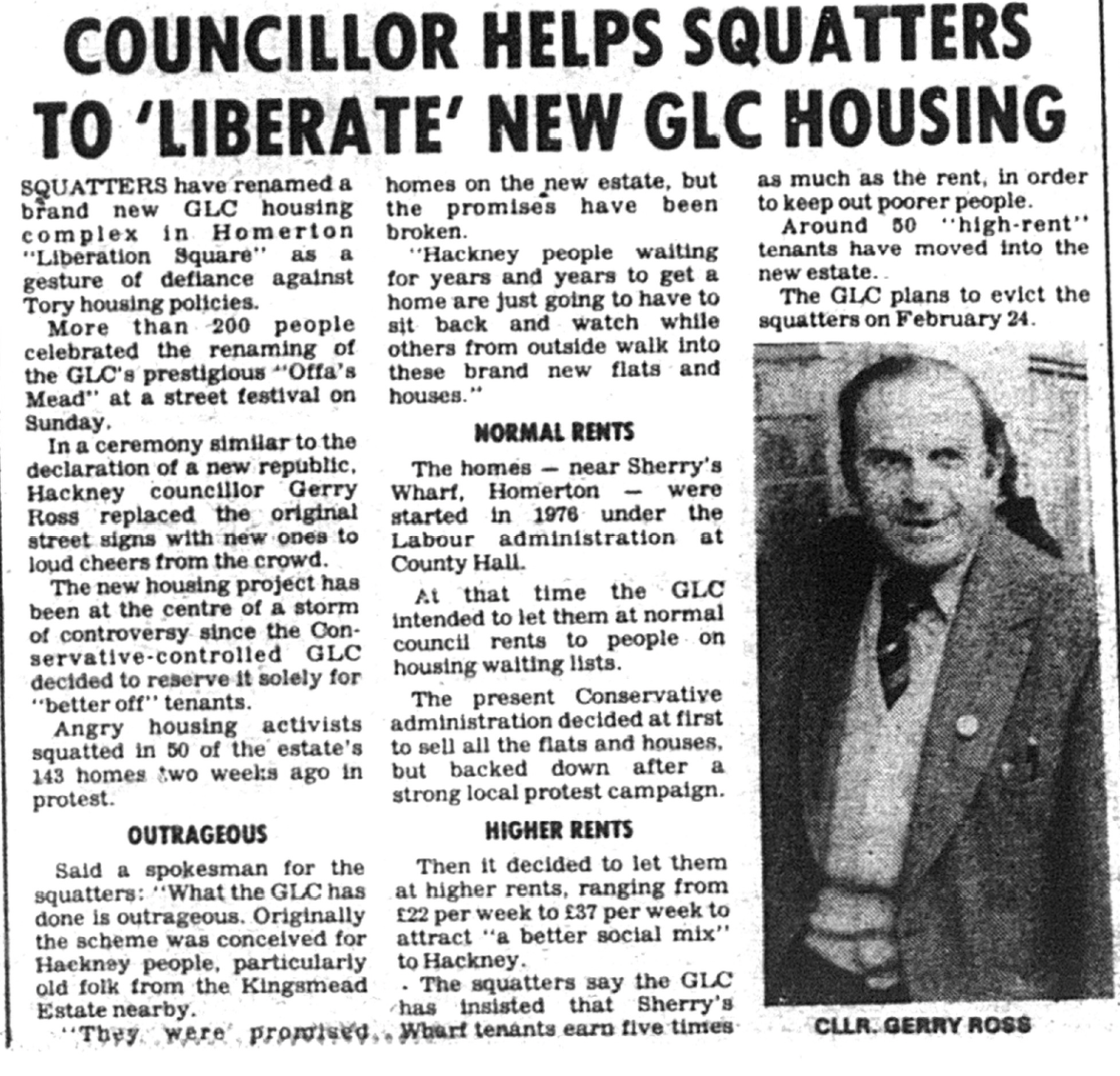
Around 50 of the flats were rented out. But then, at 1:30am on the 1st of February 1981, 200 people squatted 30-50* of the properties in Sherry’s Wharf in protest against homlessness in London and against the sell off.
(*Some accounts say 30 and some 50).
Immediately after the occupation, a leaflet was distributed round the Kingsmead Estate to explain to tenants why the flats and houses were being squatted.
The squatters have also drawn up a charter of basic aims, to be agreed by everyone living there. These include taking care of the flats and houses and of the lawns and pathways on the estate, and respecting the rights and property of fellow squatters.
Regular meetings are held, attended by representatives of all the flats ana houses, and organisational tasks are shared out.
Hackney peoples press


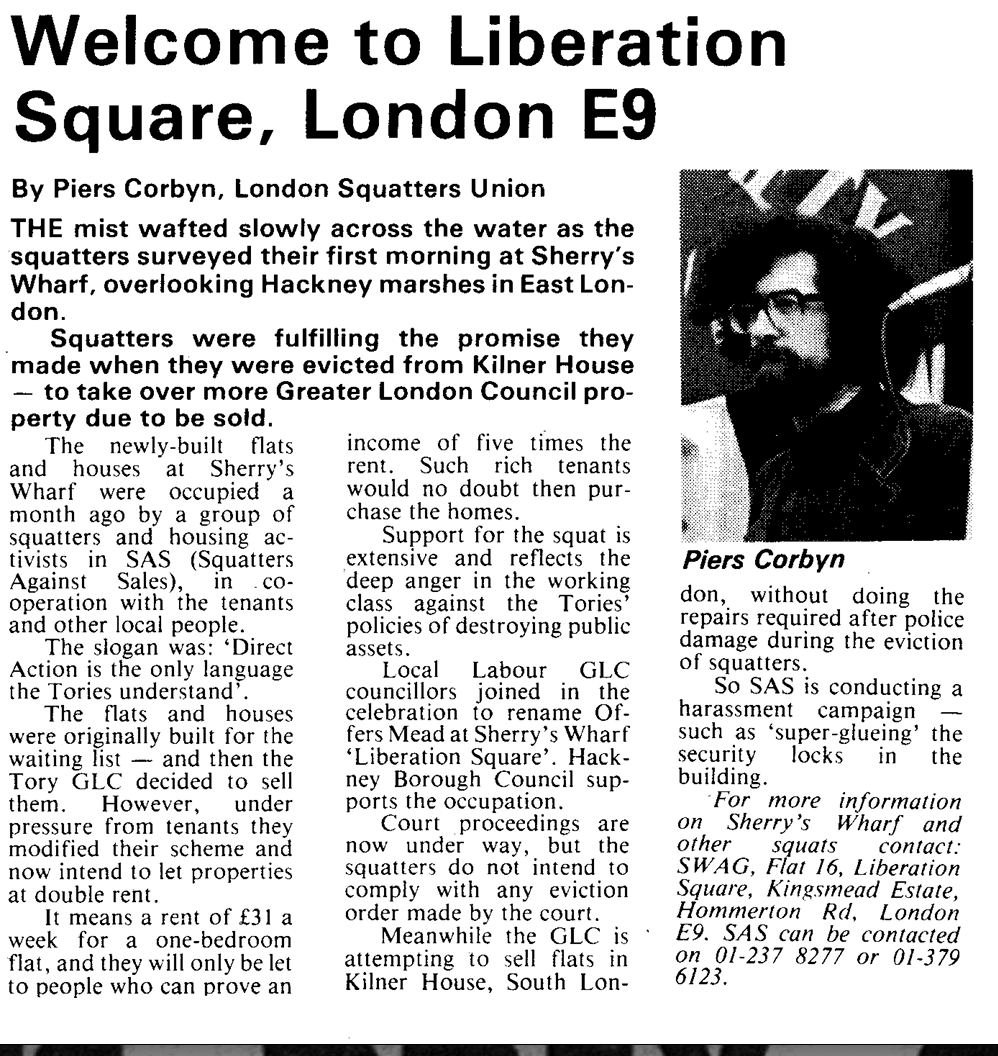
The squatters included local people organised as Sherry’s Wharf Action Group supported by activists from Squat Against Sales, who had recently been involved with an occupation of Kilner House in Kennington which was evicted in January 1981 by 600 cops from the notorious Special Patrol Group.
Hackney Peoples Press reported on the occupation and its demands:
That the sheltered accommodation should be restored and returned to the local pensioners for whom it was intended;
and that the rents on the estate should be reduced in line with the rest of Kingsmead Estate, and the income qualification removed.
The occupation has a third aim: to draw attention to the worsening problem of homelessness in London.

A street party was held on Sunday 15th February 1981 – opened by Hackney GLC Councillor Gerry Ross (Labour). About 200 people attended:
entertainment was provided by Smiley the Clown and local young musicians; there was play equipment for children, and local people got the chance to look round the flats and houses which had been intended for them.
Hackney peoples press
During the party the Offa’s Mead block / area of the estate was renamed “Liberation Square” with new signage. (See photo above). This all generated some decent press coverage.

But by April, the squatters were predicting a mass eviction, and according to Past Tense this came to pass on 17th April 1981.
The Labour Party regained control of the GLC in May 1981, heralding the era of “loony lefty” Ken Livingstone. This supposed municipal socialism does not appear to have made any difference to the situation at Sherry’s Wharf.
In May 1982, the anarchist newspaper Black Flag published some terrible poetry commemorating the protests:

Today!
The story of Sherry’s Wharf in the late 20th Century is the story of London in microcosm. It begins with the deindustrialisation of the river, followed by a move to residential use of the land, in which existing residents are priced out…
In 2018 the Hackney Council bought the freehold on the Sherry’s Wharf land from the Canal and River Trust.
Section 144 of the Legal Aid, Sentencing and Punishment of Offenders Act 2012 made it a criminal offence to trespass in residential properties with the intention of living there… But all is not lost!
Some handy insights from the always excellent Advisory Service for Squatters:
If people are squatting in a clearly residential property, they risk arrest and so losing their home, but it does not cover all situations. The law DOES NOT cover situations where:
• the property is not residential, people are or were tenants (including sub-tenants) of the property,
• people have (or had) an agreement with someone with a right to the property,
• people in the property are not intending to live there (maybe merely visiting, holding a short term art project, a protest,etc.)
Notes For New Squatters
So despite what you’ve heard, it might be possible for protests like the occupation of Sherry’s Wharf to happen in London today.
And it’s needed now more than ever. Hackney has one of the highest rates of homelessness in the country. And everyone knows someone who is struggling to pay their rent.
Official organisations like Hackney Night Shelter struggle on, doing incredible work with little funding. It was brilliant to attend a Hackney Anarchists benefit for the homeless earlier this month too.
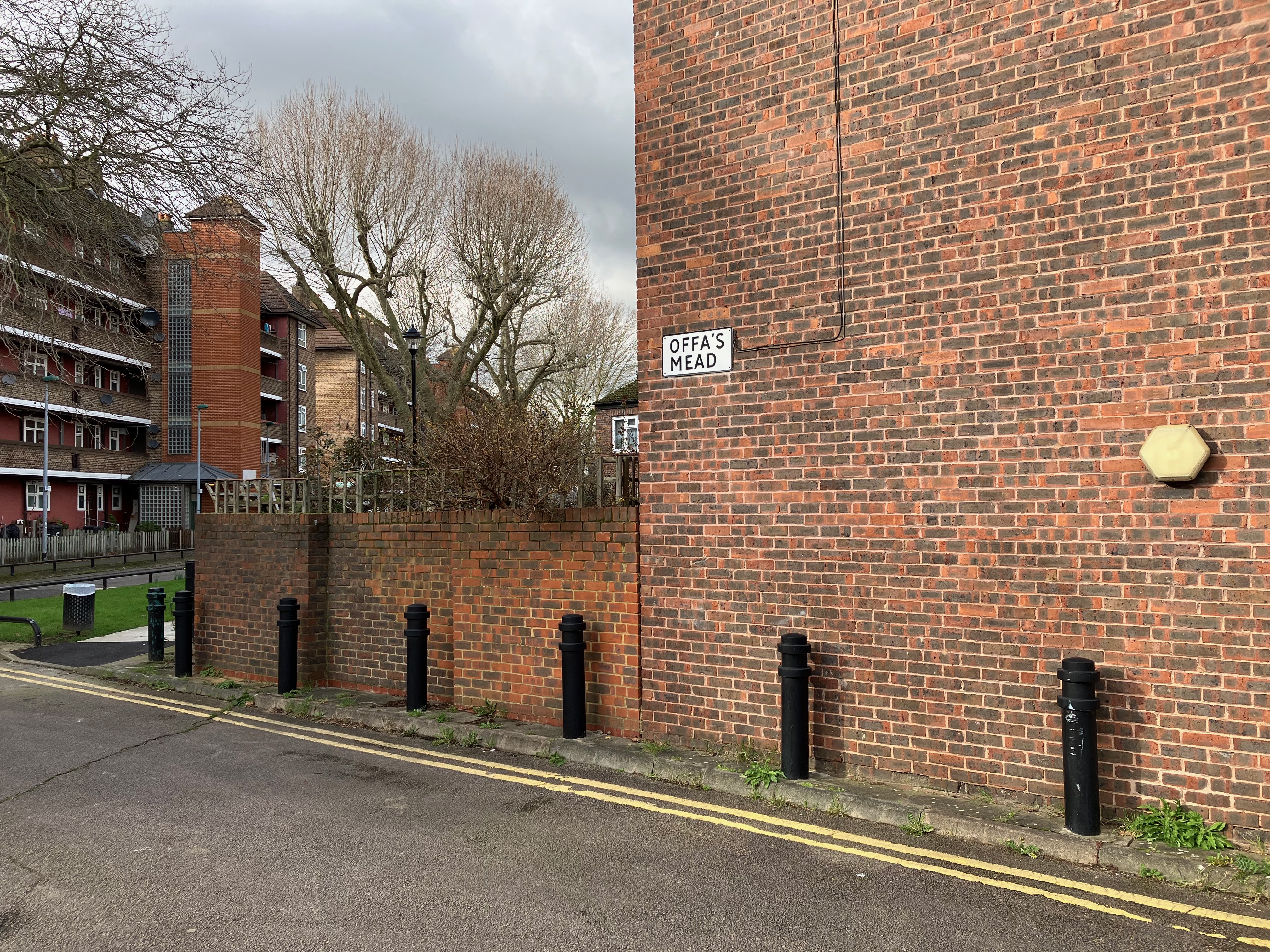
Meanwhile, a three bed flat in Offa’s Mead sold for £520.000 in 2019, which is £286k above inflation. Rental prices appear to be an immoral £2300 a month, but that, dear reader, is what you get after 43 years of local and national governments colluding in price gouging, property speculation and gentrification.
There isn’t a silver bullet to solve the housing problem (although musing on who to shoot is an increasingly enticing pastime). Fundamentally a home needs to be recognised as a human right rather than a commodity – and we won’t get there by blogging eh?
But the occupation of Sherry’s Wharf and the support this got from local residents shows us what is possible. Perhaps Liberation Square was shortlived and ultimately a failure as a protest. But it was followed by a huge revival of the squatting movement – with tens of thousands of people taking matters into their own hands and turning empty properties into homes.
As late as 1993 Hackney was still the number one borough in London for squatting. After this it became increasingy “desirable”, which meant evictions and spiralling rents.
We can’t bring those days back by dreaming about them, but we can keep the idea of free and affordable housing alive and feed that into current struggles. An insightul and fun (free!) document on the squatting movement of yesteryear is “Squatting is part of the housing movement: practical squatting histories 1969-2019”.
There is loads more to read on the history of squatting in Hackney in our housing/squatting tag.


Last Thursday, Transport for London (TfL) announced new names for six of its Overground lines and everyone got very angry on social media. For me, this all raised some interesting questions for people invested in London’s radical history and in fostering inclusivity. As well as for observers of the culture wars.

Three of the new lines pass through Hackney:
The Suffragette line does not pass through Hackney, but we have previously covered Suffragettes in Hackney and Stoke Newington. I was pleased to hear recently that further work is being done in this area by the Women from Hackney’s History team.
Outrage!
First out of the blocks was the Daily Telegraph, with a righteous defence of the role of Irish people in London:

This is wildly at odds with the Telegraph’s long history of anti-Irish prejudice, which begs the question – what has changed?
The process of Irish people becoming respectable (“white”) in America is brilliantly described in Noel Ignatiev’s classic 1995 book How The Irish Became White and similar forces are clearly still at work in London in 2024. In the conservative mind, Irish people are now an asset to London – compared to subsequent waves of immigrants from elsewhere.
GBnews decried the “woke makeover” of the Overground and The Sun also helped fill up the culture wars bingo card with “virtue signalling nonsense”.
The Daily Mail unsurprisingly found a few people who baulked at the renaming project costing £6m of public money during a cost of living crisis.
Former Boris Johnson cabinet minister Lord Frost captured a mood when he said:
“The London tradition is that public transport lines are given a name either with a royal connection or one related to the line’s geography.
Giving them political names is, whether one agrees with the politics or not, a break with that tradition.”
This is a perfect example of the problem of how a lot of people think about politics (and history). Conservatives sincerely believe that the Royal Family is not political and so they get outraged when people of Irish heritage (or from other colonised nations) take issue with that.
And so to geography. The Bakerloo and Waterloo & City lines are named after an area of London called Waterloo. This is itself a celebration of the 1815 Battle of Waterloo, which marked the end of the Napoleonic Wars. Up to 50,000 people died in the battle.
These things are not political, but the woke Suffragettes using violent direct action to secure votes for women is. And so is naming a train line after women’s football team The Lionesses.
The outrage about the Overground echoes the controversy around historians revealing the connections of various institutions and ruling class families to colonialism and the slave trade. For some, that was not a deepening of historical knowledge, but an attack on a fixed body of facts – which were commonly embodied in statues and monuments. History as tradition and stone versus history as an active process of understanding and re-evaluation.
I am reminded of the Radical History Network of North East London‘s motto:
“Celebrate our history, avoid making the same mistakes – and get inspiration to help create a better society for the future.”
Which brings us to critiques from a more progressive angle…
Is this radical history?

It is important that we celebrate this diverse group of predominantly working class migrants and remember their workplace struggles through trade unions and other organisations.
There are obvious reasons why ethnic diversity is celebrated by Transport for London’s blurb about the weavers, but their struggles around pay and conditions are not mentioned. TfL is notoriously and increasingly anti-union and it is an interesting coincidence that a strike by Overground workers over pay was called off on the same day as the announcement about the renamings.

It is important that we remember that the fighr for votes for women was multi-faceted and that the Suffragettes were amongst its most militant exponents. Exactly 111 years ago a Suffragette bomb destroyed Liberal Minister Lloyd George’s home in Walton-on-the-Hill.
On the other hand, several commentators have pointed out that the woman in the image above is Millicent Fawcett who was not a Suffragette – she was instead the leader of the National Union of Women Suffrage Societies, who deplored the direct action tactics of the Suffragettes. So that’s quite funny.
We shoud defend the legacy of direct action. And in doing so, remember that whenever it is used it is decried by the media, courts and politicians – until enough time has passed for it to be deemed good and proper. This celebration of the Suffragettes is in stark contrast to the UK government’s ongoing clampdown on the right to protest.

It is important that we recognise the contribution of the Windrush generation in spite of the brutal racism that it has faced.
The TfL site does mention that the Windrush generation was “often met with intolerance and denied access to housing, shops, pubs, clubs and even churches on account of their race”.
It does not mention that the origin of this project of migration was in the British Empire, a violent exercise of racist colonisation which received the blessing of the “non-political” Royal Family of the time.
The TfL acknowledgement of “intolerance” does not really do justice to the normalised violence and institutional racism faced by London’s black communities from the 1950s onwards. HMS Windrush will now be forever associated with the Windrush Scandal, in which the Conservative Party’s “hostile environment” for immigrants was directed towards the Windrush generation and its descendants. This resulted in countless detentions, threats of deportation and actual deportations for members of this “celebrated” community.
TfL is correct to point out that “Caribbean communities enriched and expanded London’s music scene.” But back in Dalston, the founders of the influential Four Aces nightclub bore the brunt of British racism. Newton Dunbar was one of the most arrested individuals in Hackney at one point in the 1980s, despite never being charged with anything significant.
Charlie Collins (aka Sir Collins) lost his son Steve in the 1981 New Cross Fire – a tragedy at a house party which is widely attributed to a racist attack. Charlie planted 13 trees in the garden of the Four Aces in memory of the 13 victims.
The trees were destroyed when the area was demolished in 2006 to make way for Dalston Square. A luxury development of 550 apartments was built on the site. Two of the blocks are named Dunbar Tower and Collins Tower. Newton Dunbar commented:
“They called it Dunbar Tower without consulting me. I do not know if they were taking the mickey, or if they had some other more sinister intention. It’s certainly no compensation for the building which was taken from me.”
According to Newton, “the demolition of The Four Aces laid down the roots for the subsequent gentrification of Dalston.”
The Dalston towers overshadowed a botched immigration raid in May 2022, in which Hackney’s residents successfully fought against police brutality. Two months prior to this, it was revealed that Metropolitan Police officers had strip searched a black schoolgirl, ‘Child Q’ without another adult present and in the knowledge that she was menstruating. This led to several significant protests and an inquiry. Giiven the long history of police racism in Hackney it is reasonable to suggest that these two incidents are just the tip of the iceberg.

The culture wars are being waged after a decade of capitalist restructuring (aka austerity), a process which has only intensified since the pandemic. Everyone except the super-rich has seen a rapid decline in living standards during this period – and women, ethnic minorities and those at the sharp end of the economic scale have borne the brunt of it. Arguments about the names of train lines are a distraction from this. (But sometimes a distraction from the doom and gloom of everyday life can be welcome and might even be an inspiration…?)
Complicating history
Where this leads me is that celebrating past victories is not enough. Radical history needs to be more than a checklist of “cool things that happened in my neighbourhood”.
At the very least, we need to recognise the struggles that these victories arose from and the wider context that those struggles existed in.
But more than that, we should be explicit about the suffering that these now “celebrated communities” endured and continue to endure. And be inspired to fight this injustice – and all injustice – in the here and now.
Update 20th February 2024:
Thanks to the commenter who mentioned this forthcoming event in Hackney to commemorate Sir Collins and the victims of the New Cross Fire:


My first post last year was about “White Riot”, the debut of a trilogy of novels by Joe Thomas. The second intallment has just been published and is a great read.
White Riot begins with the 1978 Rock Against Racism carnival in Victoria Park. Red Menace kicks off with Live Aid, as this book covers 1985-1987. The contrast between these two large music events also evokes something different happening in popular culture and protest. (The author’s love for The Style Council is partially compensated for by some nice insights in the reggae and dancehall scene in Hackney!) The passage of time is also marked by the characters growing older and navigating through some of the big events of the era like the Broadwater Farm riot, the Wapping printworkers dispute and the related corrupt redevelopment of Docklands.
So yes, a lot of the action takes place outside of Hackney, but it is all underpinned by the creeping intensification of police involvement in the drugs trade in Stoke Newington and the various spycops and grasses that are increasingly compromised and fucked up. (One of my main reservations about White Riot is that the spycops were portrayed as heroic – the way that contradictions of the job lead to inevitable cynicism and hurting ordinary people is dealt with really well in this sequel).
As with the first book, there is a tonne of factual source material used, much of it from this site and our scans on archive.org. There are a number of documents quoted that brought a smile of recognition to my face and some very useful endnotes on sources too. The author is always very effusive with his thanks to this site in his books and public appearances and I remain very happy that he has been able to bring it all to life so effectively.
Perhaps the most enduring theme of the book for me was its focus on ordinary people trying to find their way through extraordinary times – there are no great heroes here, just men and women trying to make sense of the world and do their best in it. The last chapter in Red Menace includes references to a number of violent or fatal incidents in Stoke Newington police station and the setting up of Hackney Community Defence Association to address widespread police corruption in the Borough. I am looking forward to seeing how the third book in the trilogy tackles these themes.
Red Menace by Joe Thomas is published by Arcadia. Maybe try and get copy via one of Hackney’s numerous and excellent indepdent book shops, or order it online through Hive?
Some key documents used for the book include:

HHH were an activist video crew, based in Hackney in the 1990s. Their postal address was 10 Martello Street E8, which had been a space for creatives since 1971 (artist Bruce Lacey and industrial music group Throbbing Gristle had studios there).
The above image is a cover of the VHS tape which was the first HHH video mag issue. Thanks to a comrade who had a digitised version, I have now uploaded this to Youtube:
Some great footage of Hackney Homeless Festival, Sunday May 9th 1994. This was a free festival run with the co-operation of Hackney Council who may not have been made aware that most of the people involved were squatters in Hackney. This piece includes some great interviews with people about the homeless issue as well as music and a bunch of people having a good time in the sunshine. See if you can spot yourself / old friends / your parents.
I’ve previously covered the festival here.
The second section includes two protests in 1994 against the Criminal Justice Bill including some Suffragettes re-enacting their tactic of chaining themselves to the fence around Parliament and small homeless people’s protest march and rally on 29th May.
The final section is the huge 24 July 1994 London protest against the Criminal Justice Bill, which marched from Hyde Park to Trafalgar Square. Several protestors also rattled the cops and gates of Downing Street. There was some ensuing interaction with riot police. Some of this seems pixellated, possibly to protect some people from accusations of naughtiness?
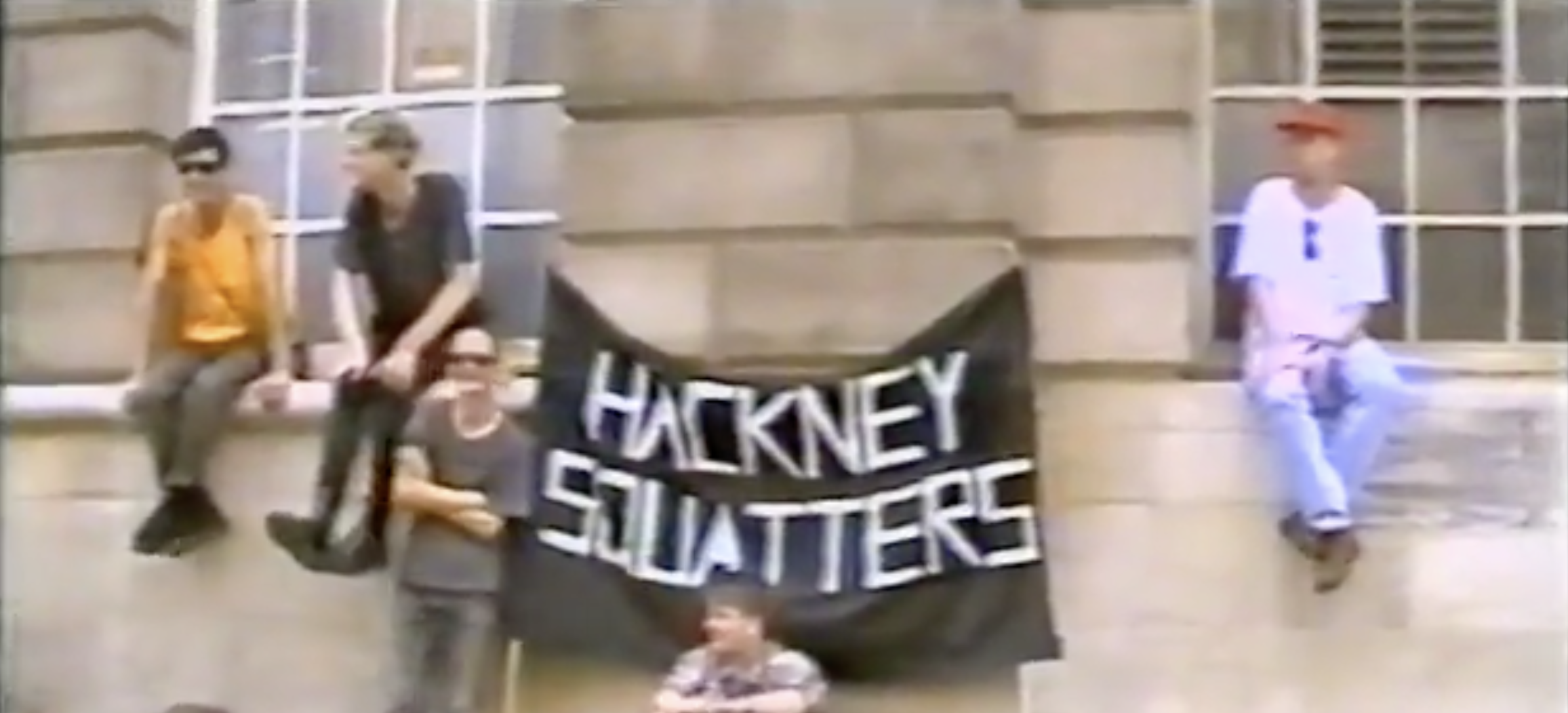
The end of the video includes some brief footage of Park Crescent (“The Crescent”) – a row of squats opposite Clissold Park in Stoke Newington. And some cheeky shots of the HHH crew themselves…
I’ve had to convert the .vob files I was given to get them on Youtube but I’ve uploaded the unedited/compressed versions to archive.org in case you want them.

According to McSpotlight, issue 2 of HHH featured “McLibel protestors sabotaging the filming of a McDonald’s commercial in Ruskin Park, London, No M11, Battle of Hyde Park, anti criminal justice demo, last stand at Claremont Road, and others.” If you have access to that, please get in touch?

I’ve also previously uploaded the HHH film of Hackney Anarchy Week.

The Federation of Worker Writers and Community Publishers (FWWCP) “originated in the late 20th century as a network of working-class writing groups, beginning in the UK but eventually spreading into Europe and the United States.”
The FWWCP is in the process of developing a digital archive of over 3000 publications here at https://www.fwwcp-dc.org/. (Update – this is now in the process of moving to https://fwwcpdigitalcollection.org/)
So far, the site includes a history of the project, a database of holdings and a selection of scanned items. It’s a greart initiative which is worthy of support.
Several of the scanned items relate to Centerprise’s efforts in the 1970s and 1980s to publish books by working class writers from Hackney. So, dig in:
(NB: Here is a link to all the downloadable Centerprise titles on the new site).
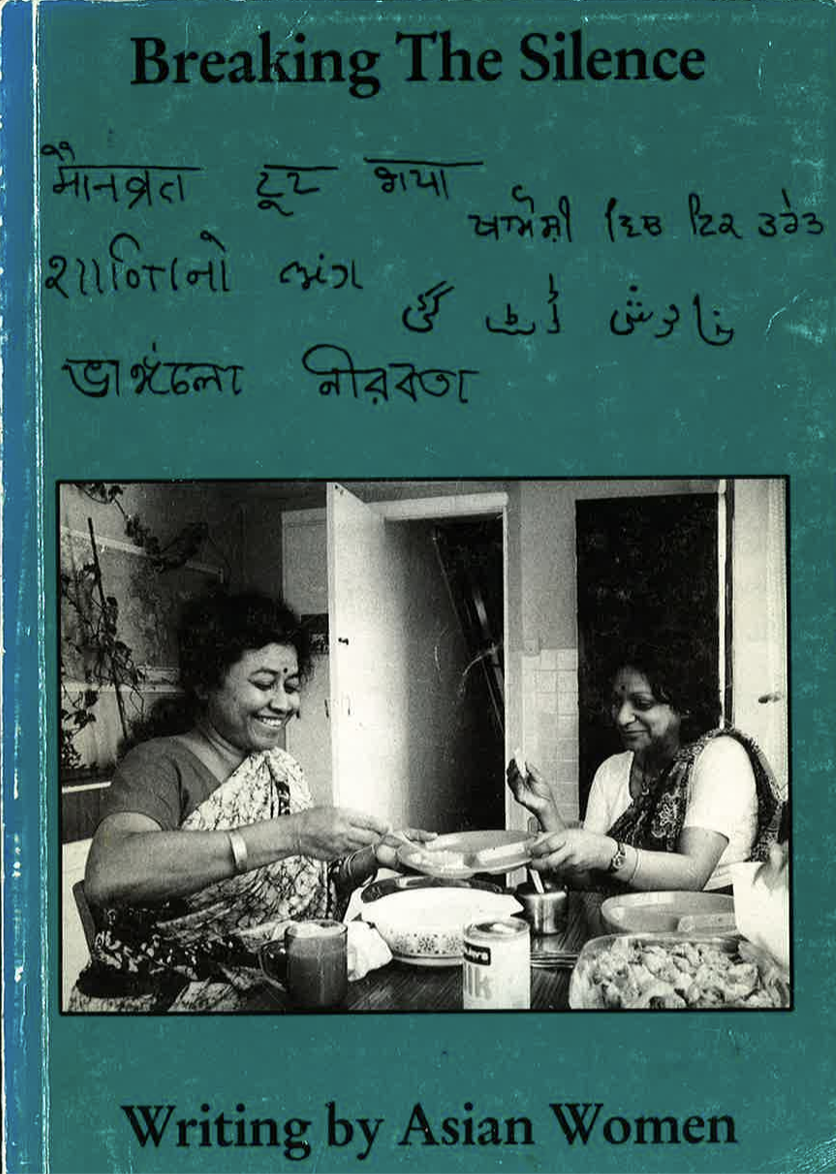
Breaking The Silence – Writing By Asian Women (1984). Anthology on life in Britain.

Going Where The Work Is – Isaac Gordon (1979). Poetry.

Isaac Gordon – It Can Happen (1985). Autobiography.
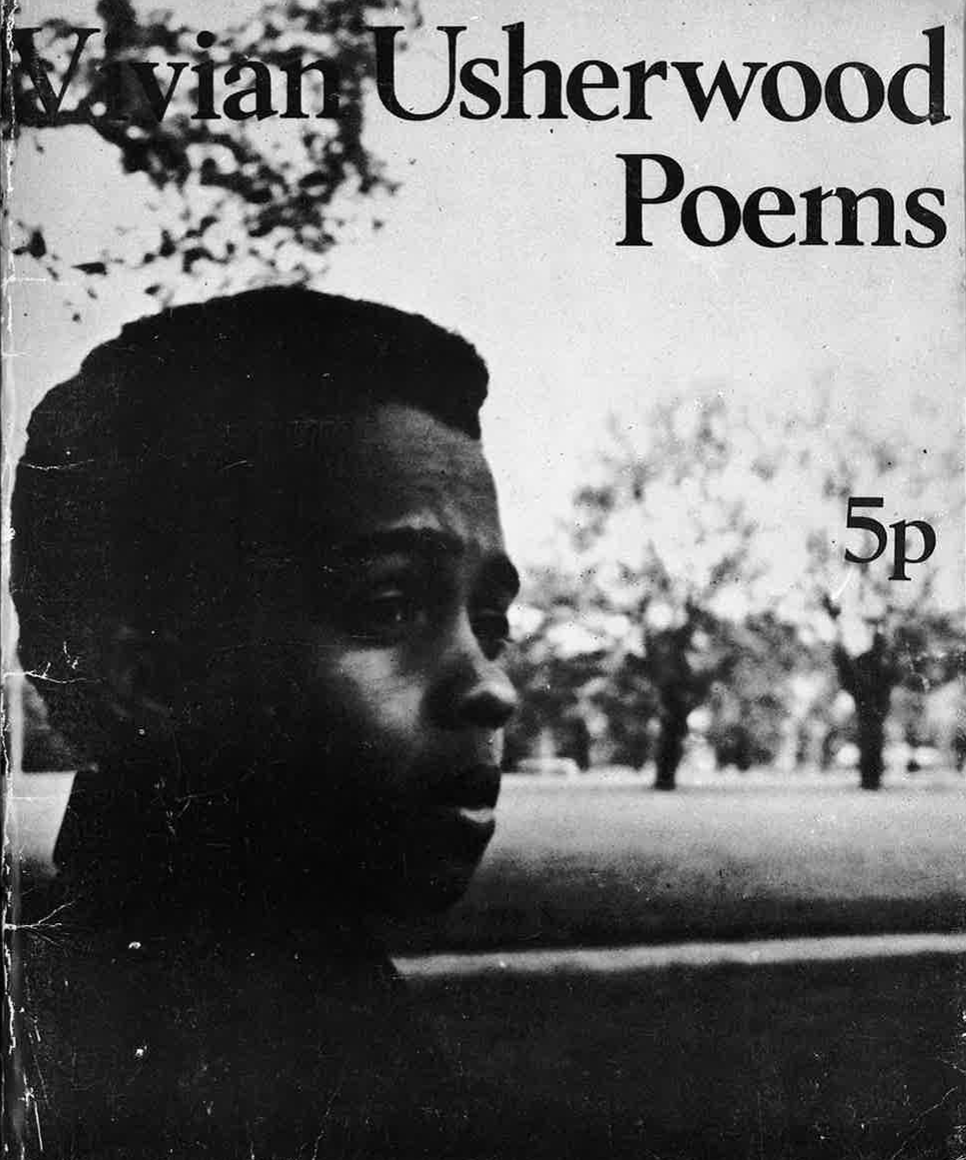
Vivian Usherwood – Poems (1972) “Vivian Usherwood was born in Jamaica, is twelves years old and goes to school in Hackney.”

Roger Mills – The Interview (1976). Fiction for new adult readers.
Also included are scans of a couple of publications about publishing working class voices generally, which include great insights into how Centerprise operated in this area:
Centerprise Publishing Project. Local Publishing and Local Culture (1977). (We also have this is as text and pdf here).
The Republic of Letters: Working class writing and local publishing (first published 1982). This includes contributions by Roger Mills and Ken Worpole that are especially interesting.

PEER is an small gallery halfway along Hoxton Street. Their current exhibiton “traces artistic, cultural and social collective work that took place in Hackney between 1971 and 1986.”:
“Bringing together new commissions, existing artwork, literature, film and archival material, the exhibition and accompanying events programme explores the radical, influential and often entwined histories of cooperative and collective work in the borough. Examining how social and political commitments were supported by an engagement with art, literature and culture, the exhibition focuses on the complexities of collective work, and questions how we might learn from the past in order to reimagine our futures.”
The title “we are a group of people…” originates in the founding document of communithy cafe, publisher and resource Centerprise from 1971. The endpoint of 1986 is when the Greater London Council closed.
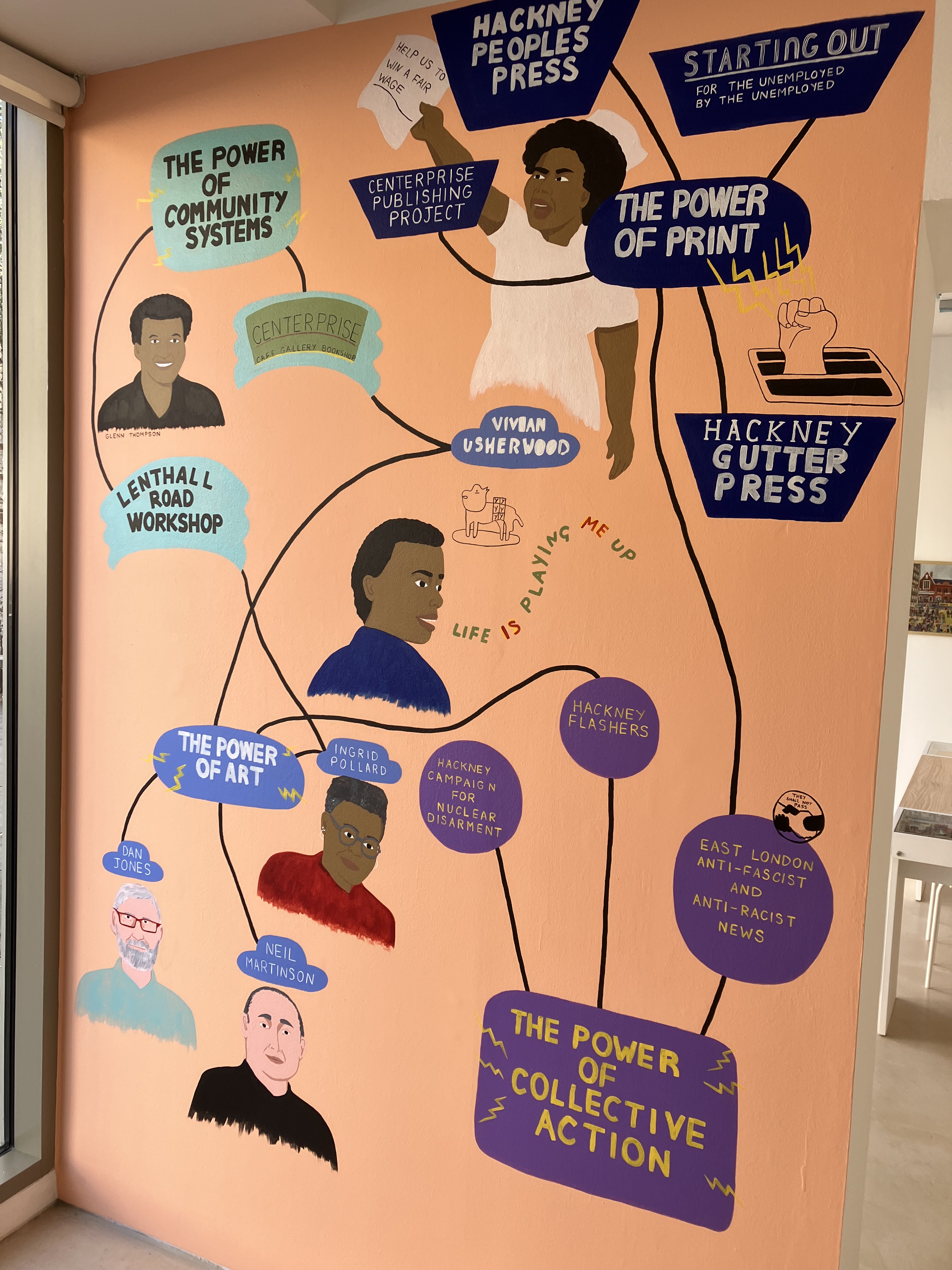
It was exciting to see the two original murals by Jacob V Joyce that had been commissioned for the event, covering as they do a lot of the projects featured on this site over the years.
The bulk of the exhibtion is archival material under glass. It’s a bit of a hodge podge, which is a fair representation of the diversity of community projects and local politics in the time covered. I was glad to see a strong focus on feminist and childcare issues along with CND, anti-racism etc.
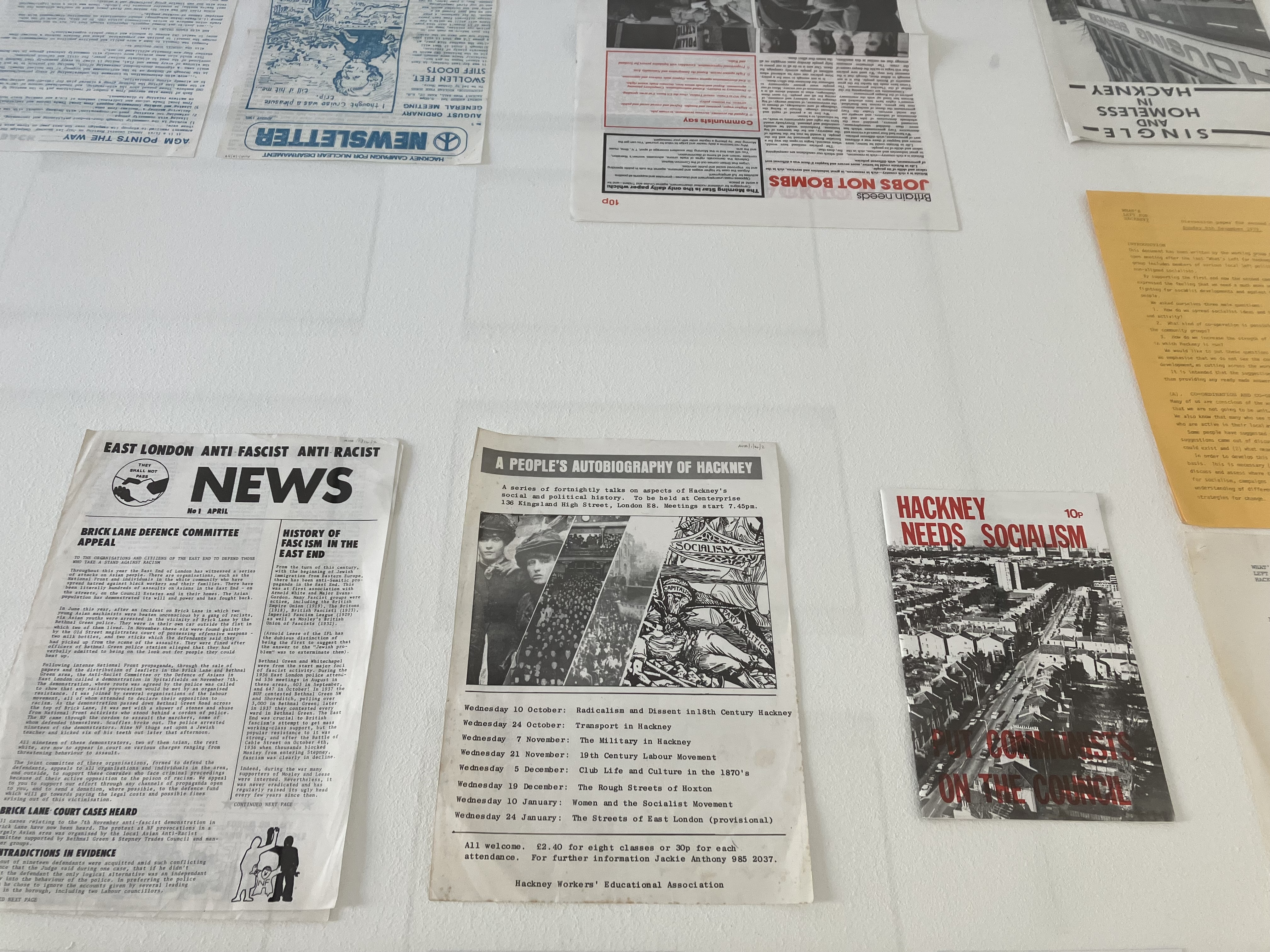

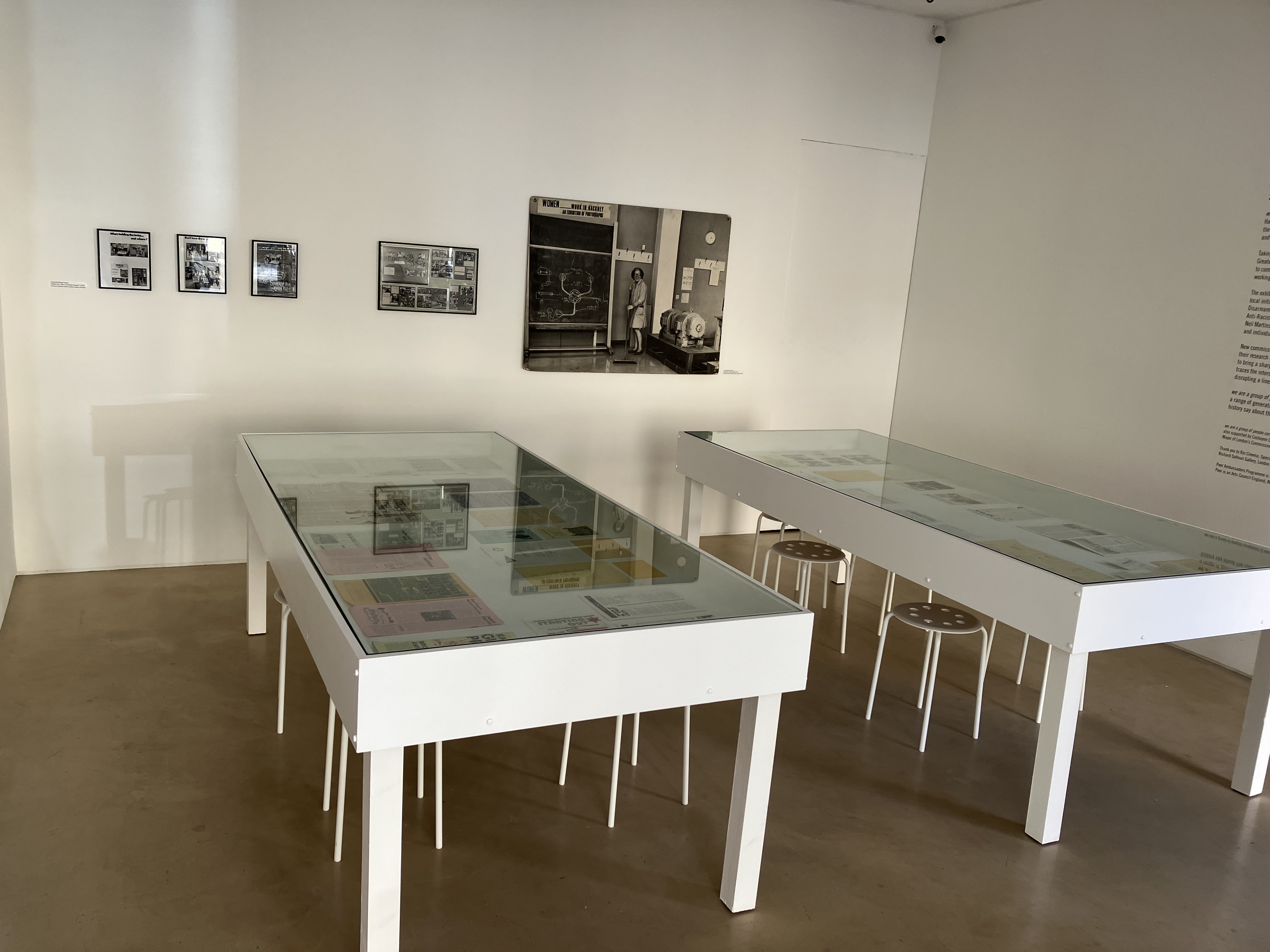
It’s always great to see this stuff out and about, but my usual criticism applies – if people are interested in the material being presented they might want to read it cover to cover. And they can, because I’ve whacked a load of it online. (See below for links).
The archival publications are supplemented by some excellent photographic artwork by people including Jo Spence (Hackney Flashers) and Neil Martinson (who I believe learned photography at a Centerprise youth workshop). Also a couple of paintings, but these seemed to relate to material slightly to the east of Hackney.
There are also two films playing on a loop – One Day (off) in Hackney (1980), which relates to the Rio Tape-Slide project, plus the umissable Somewhere in Hackney (1980), which is a longer film covering community groups active in Hackney including Centerprise, Lenthal Road Print Workshop and Caribbean House. My visit unfortunately was too late in the day to see “One Day (off)” so I will need to go back to check that out.
There are also a bunch of interesting events tied to the exhibition, and I was a bit irritated with myself for not finding out about it sooner as I’ve missed some that looked interesting. Anyway, stil to come is:
Thursday 3 August, 6.30pm Writer and academic, Adam Elliott-Cooper responds to the exhibition focusing on the history of Black resistance to state racism and racial violence in London. Adam’s first monograph, Black Resistance to British Policing, was published by Manchester University Press in May 2021 and he is co-author of Empire’s Endgame: Racism and the British State (Pluto Press, 2021).
Saturday 12 August, 1pm – 4pm As part of Hoxton Street Summer Fair join On the Record as part of the Grow Your Own oral history project for an interactive, zine making workshop exploring the history of community action for childcare in Hackney. In the 1970s campaigners demanded better childcare and created nurseries and children’s centres for everyone to use. Discover what we can learn from this history to help us tackle the childcare crisis we face today. The workshop is suitable for ages 6+ with drop-in sessions running between 1pm – 4pm.
Thursday 31 August, 10.30am – 12.30pm Hackney based artist Aya Haidar leads a workshop for Hackney Circle members that responds to Peer’s exhibition programme. Hackney Circle is a membership community for older residents of Hackney interested in creative and cultural events and activities. If you want to find out more please ask a member of staff for more information.
There is also a related showing of the film Breaking Ground (2013) about Stoke Newington Irish Womens Centre at the Rio Cinema on 6 September.
Which leads me to another mild criticism of the exhibition and its framing around GLC funding. There is no doubt that the GLC supported a lively culture of resistance in London and many groups struggled to survive after Thatcher abolished it. This is covered really well in the Breaking Ground film which shows how Stoke Newington Irish Women’s Centre had to allocate much of its time and resources to funding bids and the respectabilithy that entailed. But the Centre did manage to continue until 2012, some 26 years after the GLC was abolished. This is a testament to the immense work put in by the Irish women of the Centre and their tenacity. At the other end of the spectrum, I’d be very surprised if the radicals at Hackney Gutter Press were ever funded by the GLC.
Of course, there needs to be a cut-off point with any physical exhibition and the curators have done an excellent job. I’d strongly recommend a visit to PEER to see all this, but bear in mind that Hackney’s “artistic, cultural and social collective work” extends far beyond 1986 and has never been solely reliant on state funding.
“we are a group of people composed of who we are” runs until 9 September 2023.
Wednesday to Saturday, 12 – 6pm
Free Admission
PEER is at 97-99 Hoxton Street, London, N1 6QL.
https://www.peeruk.org/we-are-a-group-of-people
Some things in the exhibition you can read in full here:
And a wealth of other related Hackney radical publications on our archive.org site.


Contributors to this site and other comrades did a series of walks last year. They went really well and we had a great bunch of interesting people come along and contribute. So we are at it again!
It’s a great opportunity to take radical historty of the screen and back onto the streets. And maybe have a pint afterwards.
Put these dates in your diaries and tell friends…

Back in January I wrote a brief review of Joe Thomas’ excellent novel White Riot, which uses material from this site to paint a vivid picture of Hackney residents and police in the 1970s and 80s.
The author will be discussing his book at Stoke Newington Literary Festival this Sunday 6pm at the radical venue of Newington Green Meeting House.
Tickets are £5 and some are still available.
Other events this weekend include HIstory of Stokey and a session on working men’s clubs vs private members clubs. Full programme and other information can be found at:
 The Radical History of Hackney